What Mid-Market Retailers Are Paying Extra For — And How Direct Supplier Networks Are Changing That
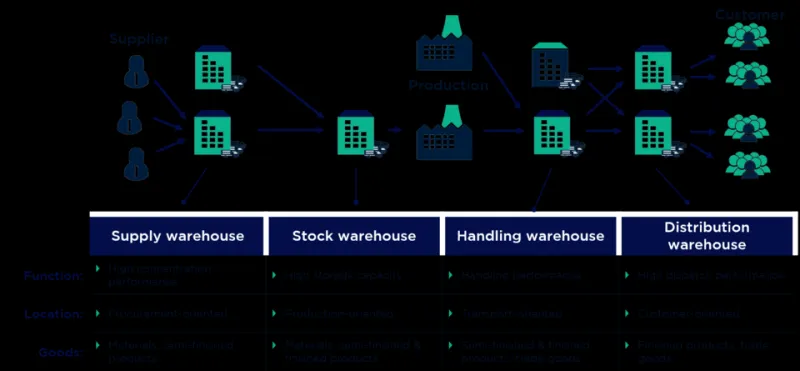
Photo: OCM Management Consultants, CC BY-SA 4.0, via Wikimedia Commons
For decades, the standard supply chain model for US retailers operated on a simple assumption: intermediaries were necessary. Distributors, brokers, and regional wholesalers served as the connective tissue between manufacturers and the retailers who stocked shelves. That model worked reasonably well in an era of limited information and fragmented logistics. But the economics have shifted, and mid-market retailers — those generating between $5 million and $100 million in annual revenue — are increasingly questioning whether the old infrastructure still serves their interests.
The short answer, for many, is that it does not.
The Layered Markup Problem
Every intermediary in a traditional supply chain adds a margin. A manufacturer sells to a national distributor, who sells to a regional wholesaler, who sells to the retailer. Each party marks up the product to cover their own operating costs and profit expectations. Industry estimates suggest that by the time a product reaches a mid-market retailer through a three-tier distribution chain, the landed cost may be 20% to 40% above what the manufacturer originally invoiced.
For a retailer purchasing $2 million in inventory annually, that range represents between $400,000 and $800,000 in costs that exist primarily to sustain the intermediary layer — not to improve the product, accelerate delivery, or reduce risk.
Consider a specialty home goods retailer based in the Midwest that spent years sourcing through a regional distributor. When that business eventually connected directly with its primary manufacturer through a digital B2B platform, it discovered that the per-unit cost on its top-selling category dropped by 22%. The distributor had been absorbing a margin the retailer had simply accepted as market price.
Logistics Delays and the Time Cost of Traditional Channels
Markups on product cost are visible — at least in principle — but the time costs embedded in traditional supply chains are often harder to quantify and easier to overlook.
In a conventional model, orders pass through multiple hands before fulfillment. A purchase order submitted to a distributor may take days to be relayed to the manufacturer, processed, picked, transferred to a regional warehouse, and finally shipped to the retailer. Each handoff introduces potential delays, and those delays carry real financial consequences: stockouts, missed sales windows, and emergency reorders at premium freight rates.
A regional apparel retailer in the Southeast documented this pattern carefully over an 18-month period. Its average lead time through a traditional wholesale channel was 23 days from order to delivery. After establishing a direct relationship with its core supplier and using a B2B commerce platform to manage purchase orders and communication, lead time dropped to 11 days. The reduction in emergency freight costs alone covered a substantial portion of the platform's annual subscription cost.
Compliance Overhead: The Hidden Administrative Burden
US retailers operating in regulated product categories — food and beverage, personal care, children's products, electronics — carry compliance obligations that intermediaries often complicate rather than simplify.
When documentation flows through a distributor, retailers frequently receive incomplete or outdated certificates of conformity, safety data sheets, and country-of-origin records. Tracking down accurate documentation from a manufacturer when a distributor serves as the primary relationship holder is time-consuming and, in some cases, impossible without direct access to the source.
Direct supplier relationships change this dynamic fundamentally. Merchants who engage manufacturers through digital B2B networks can request documentation directly, verify certifications in real time, and build compliance records that withstand regulatory scrutiny. One US-based consumer electronics retailer reported reducing its annual compliance audit preparation time by more than 60% after transitioning to direct supplier management — not because the regulatory requirements changed, but because the documentation was finally complete and accessible.
What Transparency Actually Does to Wholesale Economics
The economic case for direct supplier networks is not simply about eliminating markup. Transparency itself changes how both parties behave.
When a retailer knows what a supplier's production cost structure looks like — and when a supplier understands the retailer's volume commitments and growth trajectory — the negotiation moves away from list-price discounting and toward genuine partnership terms. Volume commitments become more reliable. Payment terms become more flexible. Suppliers invest more in fulfillment quality when they have a direct relationship with the buyer rather than an anonymous order in a distributor's queue.
Digital B2B platforms formalize this transparency. Shared order histories, real-time inventory visibility, and direct communication channels create the conditions for the kind of collaborative planning that was previously reserved for enterprise-level retailers with dedicated procurement teams.
The Switching Calculus for Mid-Market Retailers
Transitioning away from traditional supply chain intermediaries is not without friction. Distributors often hold exclusive arrangements or minimum purchase agreements that require careful unwinding. Some supplier relationships that exist through distributors will need to be renegotiated from scratch. And the internal process changes required to manage direct supplier relationships — new systems, new workflows, new team responsibilities — represent a genuine investment of time and resources.
But the data from retailers who have made the transition is consistent. Savings of 15% to 30% on total procurement costs are achievable within the first 12 to 18 months for merchants who approach the transition systematically. The key variables are identifying which product categories carry the highest intermediary markup, prioritizing direct connections with suppliers in those categories first, and using a B2B platform to manage the operational complexity that previously justified the distributor's role.
For mid-market retailers operating on margins that leave little room for structural inefficiency, the question is no longer whether direct supplier networks offer better economics. The question is how quickly the transition can be executed without disrupting the business in the process.
CommerceTop connects US merchants directly with verified suppliers across a broad range of product categories, providing the tools and network needed to move beyond the traditional distribution model — and the costs that come with it.