Your Name on the Label: How Independent Retailers Are Launching Private Brands Through Direct Manufacturer Partnerships
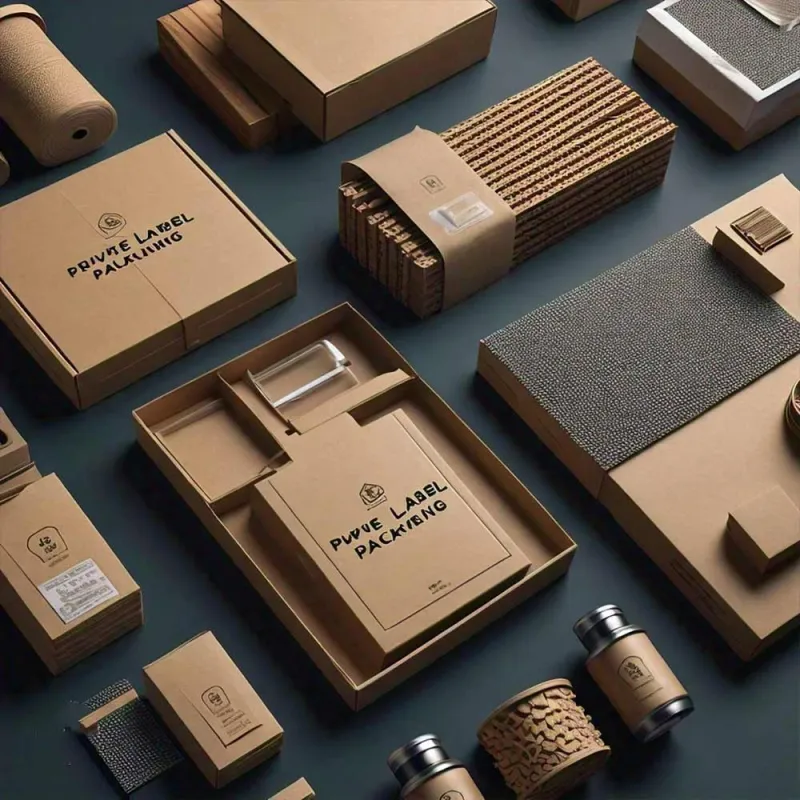
Photo: independent retailer private label product packaging manufacturer partnership small business, via mypackaginglane.com
For most of retail history, private label was a game reserved for the big players. The Targets and Costcos of the world had the volume to command manufacturer attention, the legal teams to negotiate favorable agreements, and the marketing budgets to build consumer awareness around proprietary brands. Independent retailers, by and large, watched from a distance and competed on curation and service instead.
That calculus has changed. Across the United States, independent and mid-market retailers in categories ranging from home goods and apparel to specialty food and wellness products are launching their own branded lines—and doing so at order volumes that would have been commercially impractical a decade ago. The infrastructure enabling this shift is a combination of increasingly accessible direct supplier networks, lower minimum order thresholds from a broader field of manufacturers, and a B2B commerce ecosystem that has dramatically reduced the friction of establishing international and domestic production relationships.
Why Private Label, and Why Now
The strategic appeal of private label for independent retailers is straightforward: margin control, differentiation, and brand equity that compounds over time.
When a retailer sources branded inventory from national suppliers, the margin structure is largely fixed. The supplier sets the wholesale price; the retailer sets the retail price within a range the market will bear; the spread between the two is the gross margin. That spread is typically thinner than most retailers would prefer, and it is subject to supplier pricing decisions that the retailer cannot influence.
A proprietary product changes that equation. The retailer controls the cost of goods through direct manufacturer negotiation, sets the retail price without reference to a competing brand's pricing, and builds customer loyalty around a label that cannot be comparison-shopped on Google or Amazon. For independent retailers competing against both large chains and e-commerce giants, that combination of margin protection and differentiation is increasingly strategic rather than merely aspirational.
The timing is also favorable. Manufacturers—particularly those in established production regions across Asia, Latin America, and parts of Europe—have grown more receptive to smaller initial orders as they compete for relationships with emerging retail brands. Minimum order quantities (MOQs) that once started at 5,000 or 10,000 units have, in many product categories, compressed to 500 or 1,000 units for retailers willing to accept slightly longer lead times or limited customization options at the outset.
How Independent Retailers Are Making It Work
The path from concept to shelf-ready private label product is more structured than many retailers initially expect—and more achievable than they often fear.
Start with a proven category. Retailers who have succeeded with private label consistently cite the importance of launching in a category where they already have strong sales data and customer insight. A boutique home goods retailer with deep knowledge of what her customers want in ceramic serveware is far better positioned to develop a private label line than one venturing into an unfamiliar category on the basis of trend reports alone. Existing sales history reduces the risk of misalignment between product specifications and actual demand.
Consider the example of a specialty kitchen retailer based in the Pacific Northwest that launched a private label line of artisan-style cutting boards after noticing that a single SKU from a third-party brand consistently outperformed the rest of their tabletop inventory. By working directly with a manufacturer to develop a branded version with customized dimensions and finish options—at an initial MOQ of 800 units—they achieved a retail margin 22 percentage points higher than the equivalent third-party product, while also creating an item that could not be found anywhere else in their market.
Qualify manufacturers with the same rigor you'd apply to any strategic partner. The supplier vetting process for private label development is more intensive than standard wholesale sourcing, because the stakes are higher. A quality inconsistency in a third-party brand reflects on that brand. A quality inconsistency in your private label reflects directly on your business.
Effective vetting for private label manufacturers should include: verification of production certifications relevant to your product category (food safety, materials compliance, labor standards); review of existing client references with particular attention to brands of comparable scale; sample review across multiple production batches rather than a single curated prototype; and clear contractual provisions around intellectual property ownership, quality standards, and remediation obligations.
B2B platforms and supplier directories have made the initial identification of qualified manufacturers considerably more efficient, but the due diligence process itself remains a hands-on undertaking. Factory audits—conducted either directly or through third-party inspection services—remain standard practice for retailers developing products in overseas facilities.
Negotiate MOQs strategically, not minimally. The instinct to negotiate the lowest possible minimum order quantity is understandable, but it can work against you. Manufacturers allocate their best pricing, fastest lead times, and most attentive account management to buyers who represent meaningful volume. A retailer who negotiates an MOQ of 300 units to minimize initial risk may find themselves deprioritized during production scheduling when a larger client's order competes for the same capacity.
A more effective approach is to negotiate a tiered structure: a lower initial order to validate the product with your customer base, with a clearly documented commitment to a larger second order upon confirmed sell-through. This gives the manufacturer visibility into the relationship's growth potential while giving the retailer the inventory risk protection they need at launch.
Build the relationship before you need it. The retailers who report the smoothest private label launches are consistently those who invested time in the supplier relationship before finalizing specifications. Regular communication, prompt payment, and demonstrated seriousness about the partnership create the kind of goodwill that translates into manufacturer flexibility when production timelines tighten or specification adjustments are needed mid-run.
The Competitive Advantage That Compounds
Private label is not a short-term margin play. Its most significant value accrues over time, as the branded product builds customer recognition, generates repeat purchase behavior, and becomes a proprietary asset that distinguishes the retailer in ways that commodity inventory cannot.
For independent retailers who have historically competed on personality and curation in a market increasingly dominated by scale, private label offers something more durable: a product that exists nowhere else, sold under a name that belongs entirely to them.
The supplier relationships that make it possible are available through the same B2B commerce infrastructure that connects merchants and manufacturers across the supply chain every day. The barrier to entry has never been lower. The strategic upside has never been more relevant.