The Real-Time Retail Advantage: How Syncing Supplier Data Is Ending the Era of Costly Inventory Errors
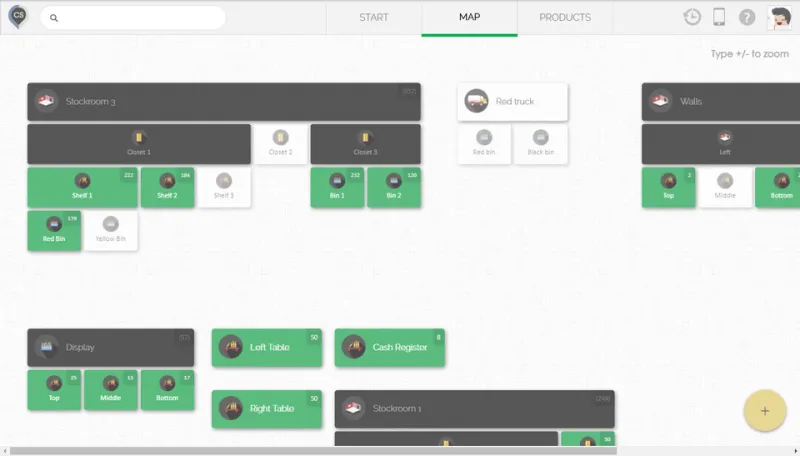
Photo: CyberStockroom.com, CC BY-SA 4.0, via Wikimedia Commons
For most independent and mid-market US retailers, the supplier data problem is not a technology problem. It is a timing problem. A distributor updates its pricing on a Tuesday. The merchant's system reflects that change on Thursday — if someone remembers to pull the updated price sheet. By Friday, a customer has already been quoted the wrong margin, an order has been placed at a cost that no longer reflects reality, and a small but real loss has been absorbed without anyone noticing.
Multiply that scenario across dozens of SKUs, multiple suppliers, and a full fiscal year, and the cumulative impact becomes material. Industry estimates consistently suggest that inventory inaccuracies — including overstock, stockouts, and pricing mismatches — represent one of the largest controllable cost categories in retail operations. For many merchants, the losses are not dramatic enough to trigger an incident review but persistent enough to quietly suppress profitability quarter after quarter.
Real-time supplier data integration is the operational shift that addresses this problem directly. And for merchants who have made the transition through modern B2B commerce platforms, the results are measurable, immediate, and in several cases, transformational.
The Anatomy of a Data Lag Problem
To understand why real-time integration matters, it helps to map precisely where manual data processes break down.
The first failure point is pricing latency. Supplier price changes — driven by commodity costs, freight adjustments, or promotional programs — are typically communicated via email, PDF price sheets, or portal updates that require manual entry into the merchant's point-of-sale or ERP system. During the window between a supplier's price change and a merchant's system update, every transaction processed at the old price represents either a margin leak or a customer-facing discrepancy.
The second failure point is inventory visibility. Merchants ordering against supplier availability data that is hours or days old are making purchasing decisions based on information that may no longer be accurate. A distributor that showed 500 units available on Monday morning may be at zero by Monday afternoon. Orders placed against stale availability data result in backorders, fulfillment delays, and the downstream customer service costs those failures generate.
The third failure point is catalog synchronization. Suppliers regularly add, discontinue, and modify SKUs. Merchants operating on manual catalog management may be actively promoting discontinued items, missing newly available products that their customers would purchase, or carrying incorrect product specifications that create return and dispute costs.
What Integration Actually Looks Like in Practice
Real-time supplier data integration, as implemented through contemporary B2B platforms, connects a merchant's internal systems directly to supplier data feeds — pulling live pricing, inventory levels, and catalog updates on a continuous or near-continuous basis without requiring manual intervention.
For a specialty home goods retailer in the Midwest that recently completed this transition, the impact on overstock was immediate. Prior to integration, the business was placing replenishment orders based on weekly supplier inventory exports. Because those exports reflected availability at a fixed point in time, the retailer frequently over-ordered into categories where the supplier had already fulfilled large wholesale commitments to other accounts. The result was excess inventory that required markdown to clear.
Following integration, replenishment orders are triggered against live availability data. The retailer's buyers can see exactly what is in stock at the supplier level before committing to an order, and purchasing quantities have been calibrated accordingly. In the first two quarters post-integration, the business reported a 23 percent reduction in overstock value and a corresponding improvement in inventory turn.
A Pacific Northwest outdoor equipment distributor working with retail partners through a shared B2B platform saw the inverse problem resolved. Its retail accounts had been experiencing stockouts on high-velocity seasonal SKUs because reorder triggers were set against inventory data that was already outdated by the time it reached the merchant's system. With live inventory feeds, retail partners could set automated reorder points against accurate availability thresholds. Stockout incidents in the top 20 SKUs dropped by more than 30 percent in the following season.
The Integration Points That Deliver the Highest ROI
Not all integration is equal in terms of return. For merchants evaluating where to focus initial implementation effort, three specific data streams consistently deliver the highest measurable impact.
Live pricing feeds produce the fastest visible return for merchants in competitive retail categories where margins are tight and pricing accuracy directly affects sell-through. Eliminating the gap between supplier price changes and merchant system updates protects margin on every transaction processed during what was previously a vulnerability window.
Inventory availability APIs deliver the highest impact for merchants with active e-commerce channels, where overselling discontinued or out-of-stock items creates both financial losses and customer relationship damage. Merchants offering real-time available-to-promise information to their own customers can only do so credibly if their supplier availability data is equally current.
Automated catalog synchronization provides the most significant long-term operational value for merchants managing broad SKU assortments. Keeping product listings, specifications, and availability status current without manual review eliminates a persistent category of fulfillment errors and reduces the customer service overhead associated with incorrect product information.
Scaling Integration Across Business Sizes
A common misconception is that real-time supplier data integration is an enterprise-level capability — relevant to national chains but out of reach for independent and regional operators. That gap has narrowed considerably.
Small-format independent retailers with relatively simple supplier relationships can implement basic pricing and inventory sync through B2B platform connections that require no internal IT resources. Mid-market operators with more complex multi-supplier environments and ERP systems can access deeper integration through platform APIs that connect supplier data directly into existing infrastructure.
The cost calculus has also shifted. For most merchants, the margin recovered through reduced overstock and eliminated pricing errors pays for integration costs within the first two to three quarters of operation. The ongoing operational benefit — reduced buyer labor, fewer fulfillment disputes, more accurate purchasing decisions — compounds over time.
Moving From Reactive to Predictive
The most advanced application of real-time supplier data is not simply eliminating current errors — it is enabling forward-looking purchasing intelligence. When a merchant's system has continuous visibility into supplier inventory levels, it can identify leading indicators of supply tightness before those constraints affect the merchant's own stock position.
A supplier's available inventory declining faster than seasonal norms may signal an opportunity to place an early order before availability tightens. A pricing pattern that suggests an upcoming promotional window can inform purchasing timing. These signals exist in the data — but only merchants with live access to that data can act on them.
For retailers operating in categories where timing and availability are competitive differentiators, this shift from reactive to anticipatory purchasing represents a genuine strategic advantage. The merchants building that advantage today are doing so not through larger buying budgets or more sophisticated forecasting models, but through better, faster access to the supplier data that was always available — just never current enough to act on.